How to Keep Good Construction Site Records When Teams Are Too Busy
Capture site events in real time through chat or photos so busy construction crews create reliable records and protect your entitlement.
.png)

Capture site events in real time through chat or photos so busy construction crews create reliable records and protect your entitlement.

Construction site records are critical for proving what happened on a project, but they often get neglected when teams are racing to meet the next milestone. Traditional site diaries or end-of-day reports require time and attention that busy crews usually don’t have. As a result, important events go unrecorded or are only noted after the fact, weakening any entitlement or claim later. Even the most diligent teams can end up with thousands of disconnected notes that no one can easily use during a dispute. The fix is to shift reporting into the workflow rather than after it.
On many projects, record-keeping depends on retrospective reporting. Supervisors fill in site diaries at day's end, and informal instructions live in chat threads. By then, details are fuzzy or lost. As one guide notes, site diaries are often “retrospective and summarised,” so they fail to capture the true timeline. By the time issues get reviewed commercially, notice deadlines may be missed and positions have hardened. In short, relying on memory or end-of-day notes means losing control of the facts.
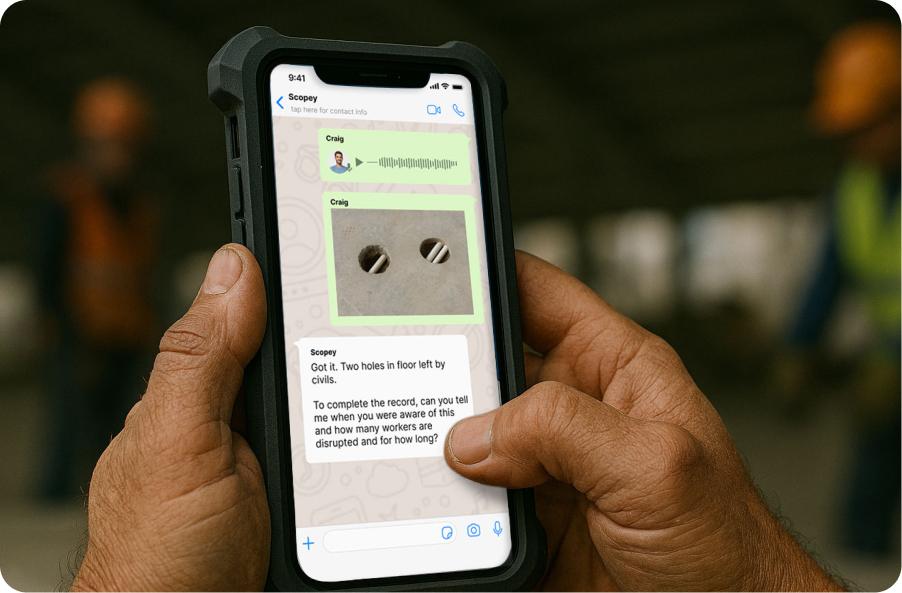
A better approach is to capture updates during the work itself. Report any change, delay or instruction immediately – in whatever simple form is natural on site. For example, if a foreman sees a blocked delivery or a sequencing problem, they might send a voice note or photo via WhatsApp right then and there. Because the information is timestamped and recorded instantly, it becomes reliable evidence of the event. This real-time capture is key: it takes almost no extra time and, as experts point out, “does not slow projects down”. In fact, capturing instructions as they happen reduces ambiguity and saves time later, because you avoid digging through memory or email chains.
To minimize the burden, use tools crews already have. WhatsApp, Teams or similar chat apps are common on site. Site teams can simply send messages, photos or voice notes to a dedicated group or bot as events occur. For instance, Scopey Onsite provides a WhatsApp number that team members use during the workday: they report “Millwrights waiting for power at Zone B” or “Excavator hit hidden pipe” by messaging or taking a quick photo. There’s no separate diary or app to learn, and no slow paperwork. In the background, software captures those messages and builds a structured record.
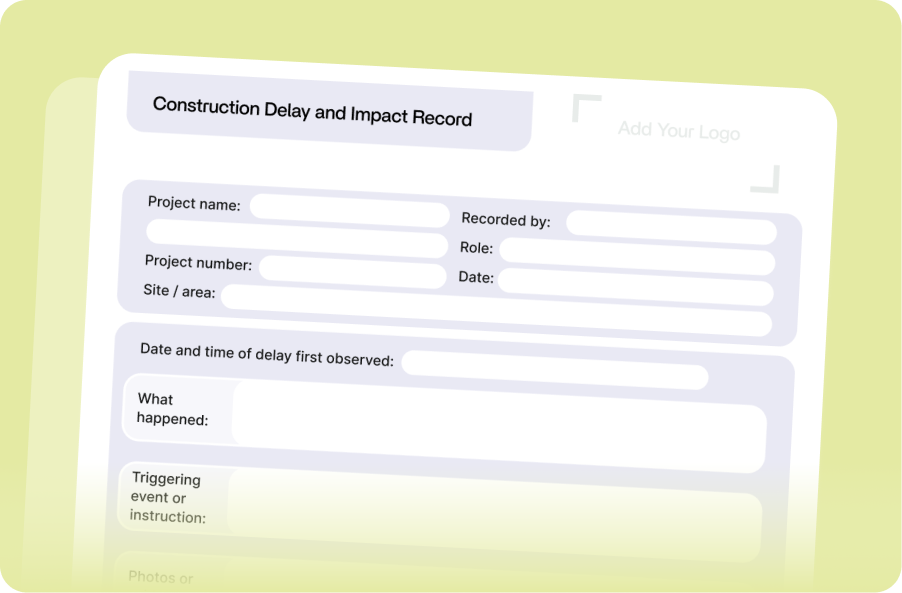
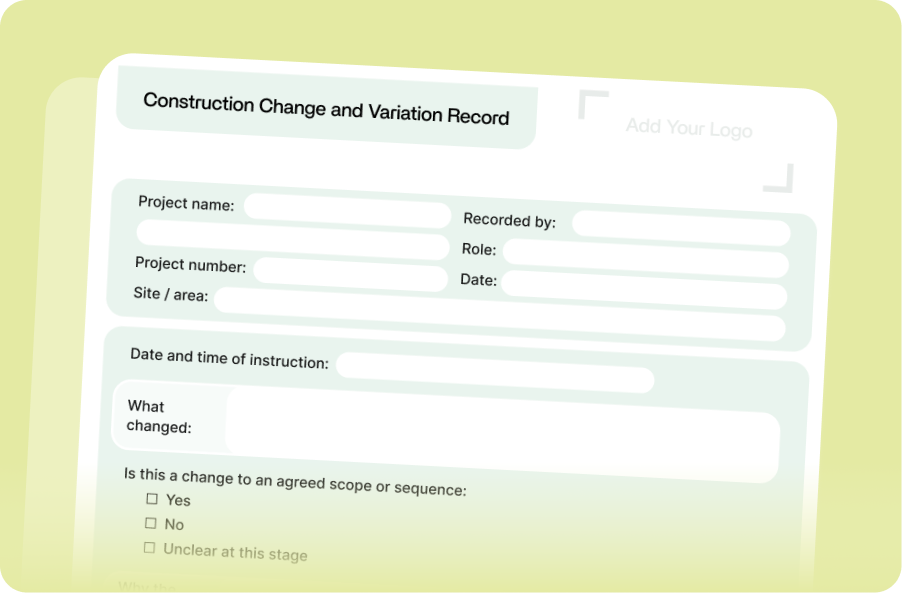
Good site records only need a few key details, captured early:
Scopey’s reference guides emphasize collecting exactly these details at the moment of change. A simple on-the-spot note in chat (even just a voice note) will contain much of this or trigger follow-up questions automatically. It beats the alternative of trying to remember it all at the end of a long day or sifting through a messy WhatsApp group after the fact.
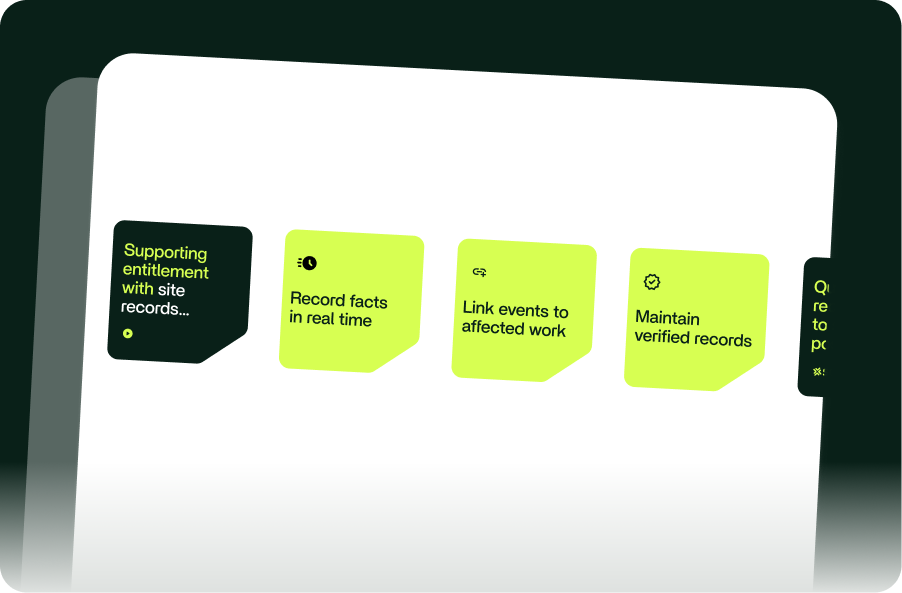
Recording events in real time creates a strong documentary trail. If the project schedule shifts, the records now explain exactly why (instead of leaving it to hearsay). Contract forms like NEC require early warnings of potential delays; having immediate site records means you have those warnings ready within the contractual window. As Jason Lancini famously puts it, thousands of disconnected records are “useless because they’re disconnected from our schedule”. Real-time, structured entries avoid that problem by linking each update to the work it affected.
Ultimately, making reporting easier – not heavier – is the goal. When teams use their phones to capture what they already see and do, records improve naturally. The result is clearer communication, preserved entitlements, and issues resolved before they escalate into disputes.

Developed alongside forward-thinking construction teams and project leaders who want to simplify reporting, strengthen compliance, and stay ahead of risk.
Let’s talk.

Commercial intelligence for complex construction projects.
©2026 Scopey Onsite. All rights reserved.




.png)